Describe the outcome
Start with a simple prompt. The task-aware enhancer can add useful composition and quality instructions without replacing your idea.
POPULAR · QUALIFIED
A fast general-purpose Google model for users who want strong results without choosing lots of technical settings.
OWNER-APPROVED REAL OUTPUT
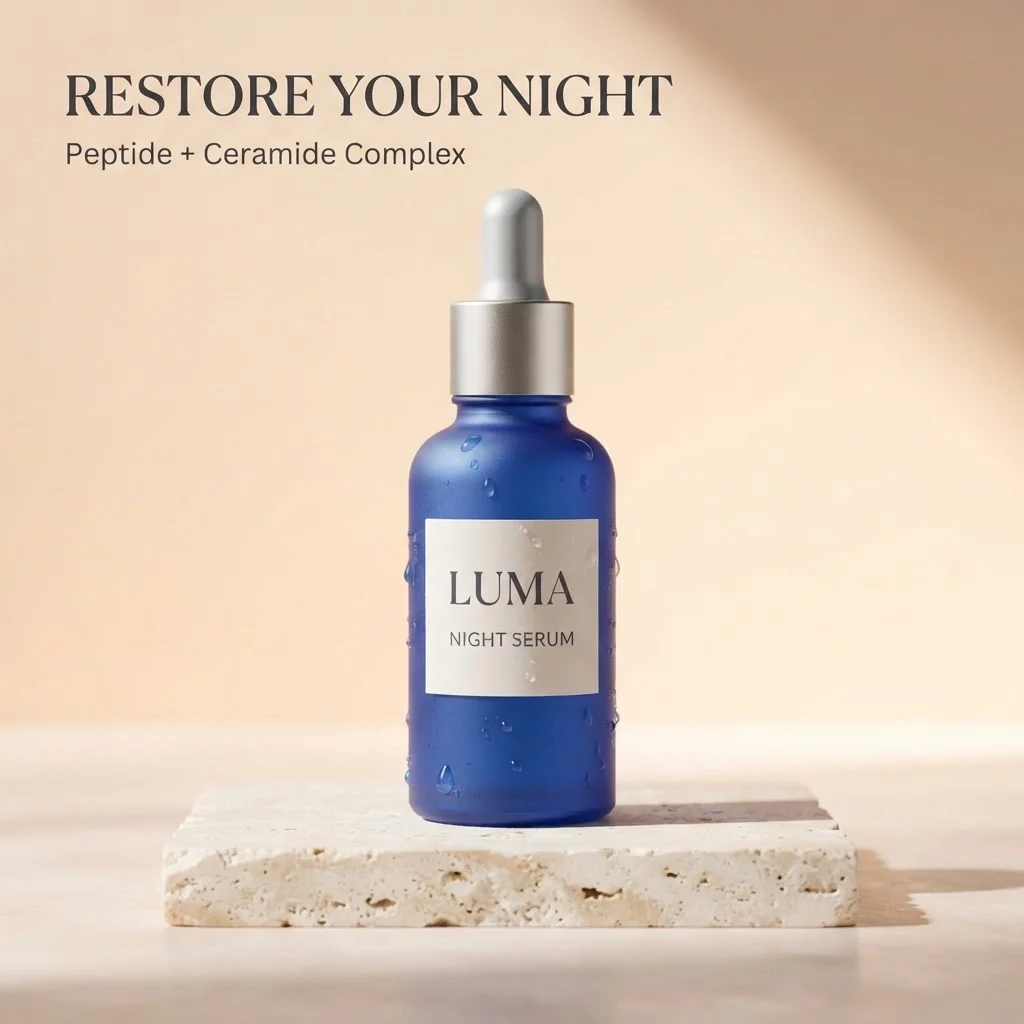
This is one paid 1024×1024 run using the same LUMA Night Serum prompt as the other model examples—no paid retry and no selected best-of batch.
Start with a simple prompt. The task-aware enhancer can add useful composition and quality instructions without replacing your idea.
The exact credit cost is visible before generation. Failed or blocked jobs restore reserved credits once.
Results land in the same private creation history, even when you change models between attempts.
Nano Banana 2 Lite is the everyday starting option in this workspace for text-to-image work and single-reference edits. Begin with an ordinary description of the subject, setting and desired change. A simple request gives you a clearer basis for judging the result than several unrelated style instructions combined. Lite is a separate selectable option from Nano Banana 2.1 here, with its own credit cost. Do not assume that a result, prompt or reference will behave identically when you switch between them.
Adapt this illustrative prompt to your own subject. It is not the prompt used for the shared product example above, and no output is claimed for this example.
Using the uploaded photo as the reference, place the same ceramic mug on a tidy breakfast table beside a folded linen napkin. Keep the mug color and handle shape recognizable. Use soft daylight and a simple background. Do not add lettering or extra handles.
For this kind of edit, compare the object before checking the atmosphere. Inspect the handle, rim, color and any existing decoration. A convincing table scene is not sufficient if the mug itself has changed in a way that matters to you. The prompt asks for preservation but does not guarantee it. If exact geometry or brand marks are essential, keep the source photograph available and consider a deterministic layout workflow instead. The example prompt is illustrative and is not presented as a completed product test.
Try one clearly described change first, such as a different setting while keeping the subject recognizable. Asking for a new setting, new pose, new color and new style simultaneously makes it harder to understand which instruction caused an unwanted result. Download a useful version before moving on. The reference workflow currently accepts one image, so this page is not a two-photo merger. For a fair comparison, retain the same source photo and describe the same intended change. Use Photo Collage when the goal is simply to display several existing photos together without generating a new scene.
The catalog currently lists 3 credits per image for this option. The amount shown in the studio before submission is the relevant check for your request. Browsing a model page and preparing a prompt do not generate an image. A new generation is a new request, including when you change only a few words. Plan a small comparison around a specific question rather than repeatedly submitting the same uncertain brief.
The shared commercial example shows one completed output from the same product-ad brief used on the other model pages. It helps you inspect that particular composition and visible lettering. It is not a statistically representative benchmark, a promise about average speed, or a guarantee of success on your own materials. Compare the full images instead of treating a badge or a short role description as a universal ranking. Model choice is most useful when tied to the detail you actually need to improve.
Generated results are flat images. They do not restore the source document, editable text boxes, vectors or separately selectable objects. An instruction to preserve a detail is not a pixel lock. For exact wording on an otherwise finished image, use a deterministic text overlay when that fits the task. For exact changes to an existing design, the original editable file is often the clearest route. Keep the source image so that you can compare changes and return to it if a generated revision is unsuitable.
Separate a completed image that does not match your preference from a failed generation. A successful output may still need a different composition or more accurate wording; another attempt uses credits. If the interface reports a failure, follow its visible status and check your balance before retrying. Do not submit several duplicate requests while waiting. Save a useful result before experimenting further, and inspect the downloaded file at its intended display size rather than relying only on the studio thumbnail.
Add exact text · Compare two images · Crop the finished image · Read the tested poster-edit guide
Z-Image Turbo →Qwen Image 3 Pro →GPT Image 2 →Nano Banana 2.1 →GPT Image 2.5 Flare →GPT Image 2.5 Sunburst →Grok Imagine Image 2 →
COMPARE BEFORE YOU SPEND